OVERVIEW

Designing Ally’s free debt management experience

In a market filled with free financial tools like Rocket Money and EveryDollar, Ally recognized a gap in its own ecosystem. While customers could monitor balances and credit, they lacked structured guidance to actively reduce debt.

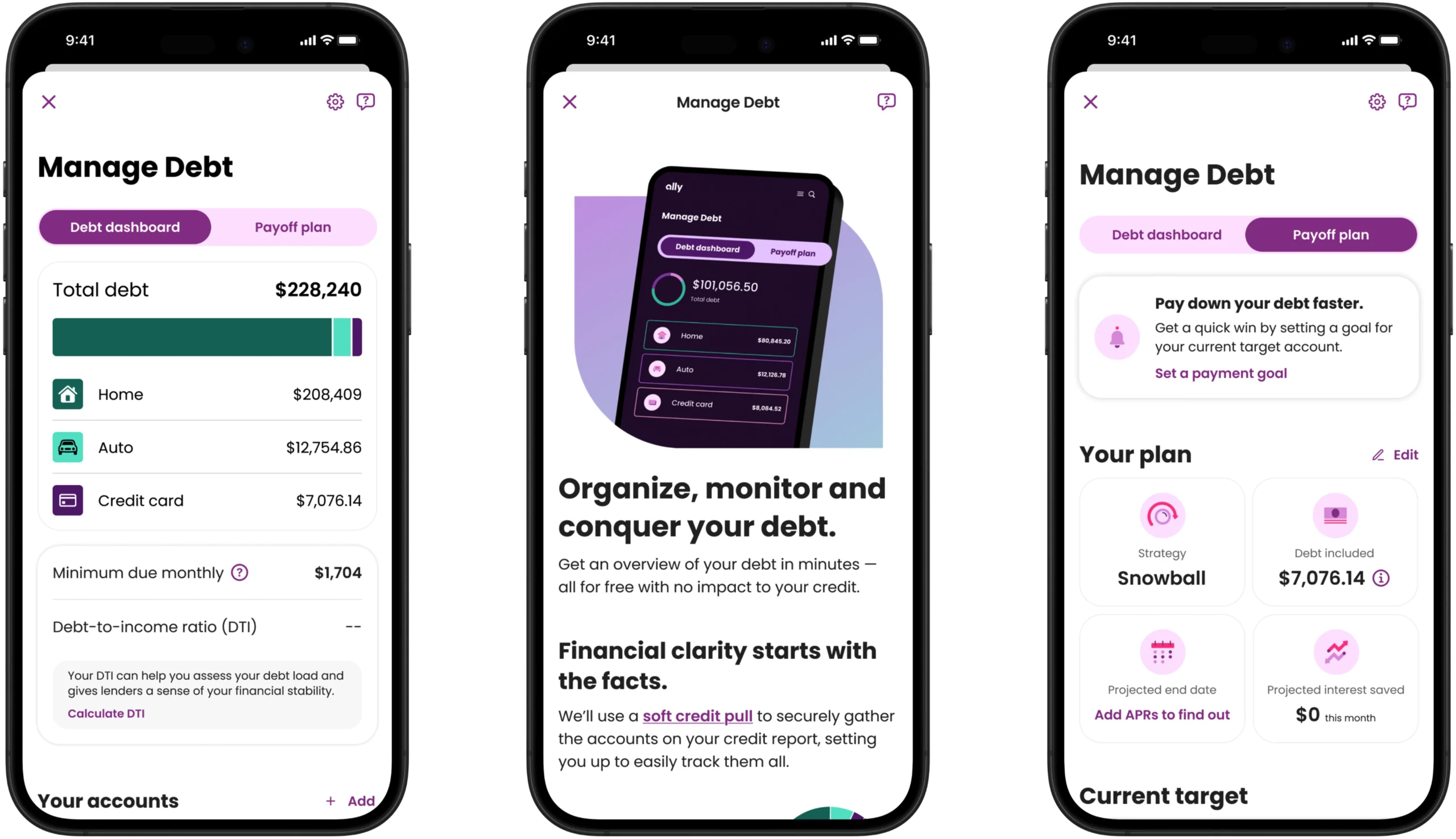
I led the design of Ally’s free Manage Debt experience, guiding customers from onboarding and strategy selection to payoff tracking and success.

ROLES

UI/UX Design, Information Architecture, User Flows, wireframes, Prototypes

TIMELINE

2021 – 2023

Discovery

The Opportunity

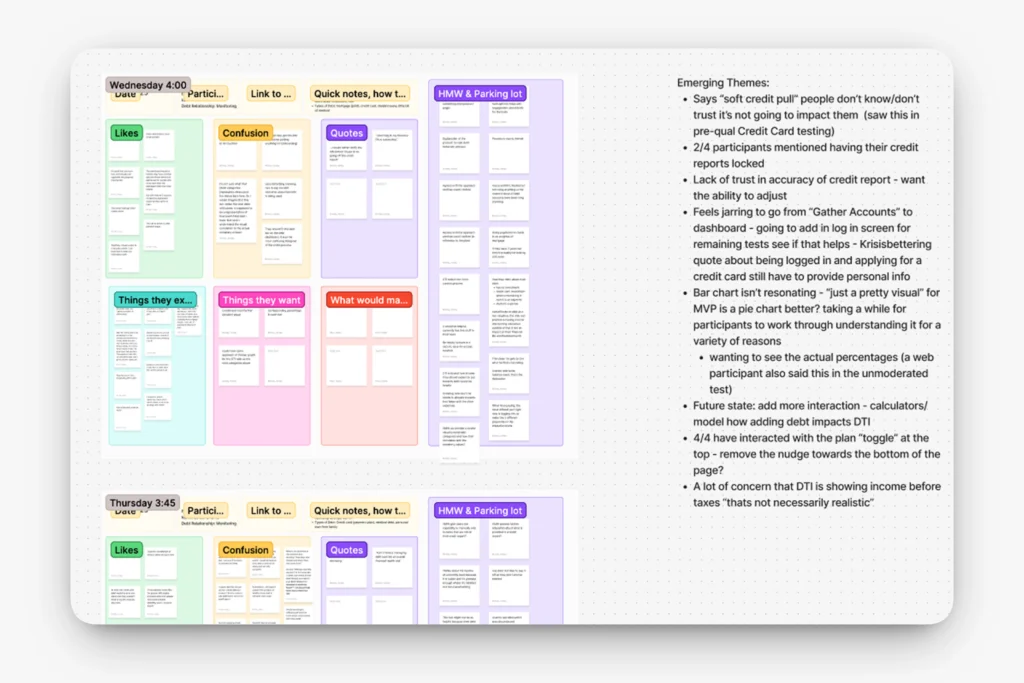
Customers wanted reassurance and a clear path to becoming debt free

User research revealed that customers were motivated to reduce debt but lacked confidence in how to do it. Many relied on multiple apps for credit visibility and validation, but struggled with strategy selection and long-term payoff planning.

The opportunity was not just to track debt, but to guide customers through structured payoff execution.

Competitive Landscape

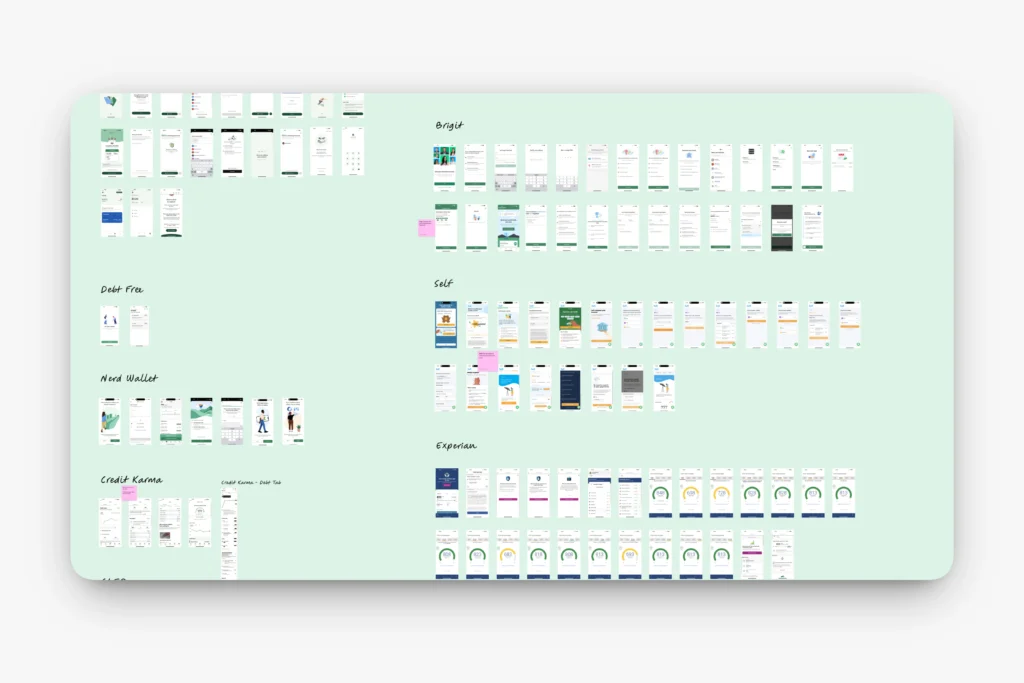
Most tools focused on monitoring. Few focused on guided payoff execution

We reviewed experiences from Self, Brigit, Experian, and NerdWallet. Most emphasized credit visibility and account aggregation but lacked interactive payoff modeling or structured strategy education.

This gap positioned Ally to differentiate through guided planning, modeling, and progress tracking.

Competitors emphasized visibility. Ally focused on guided action.

Process

Structuring the Experience

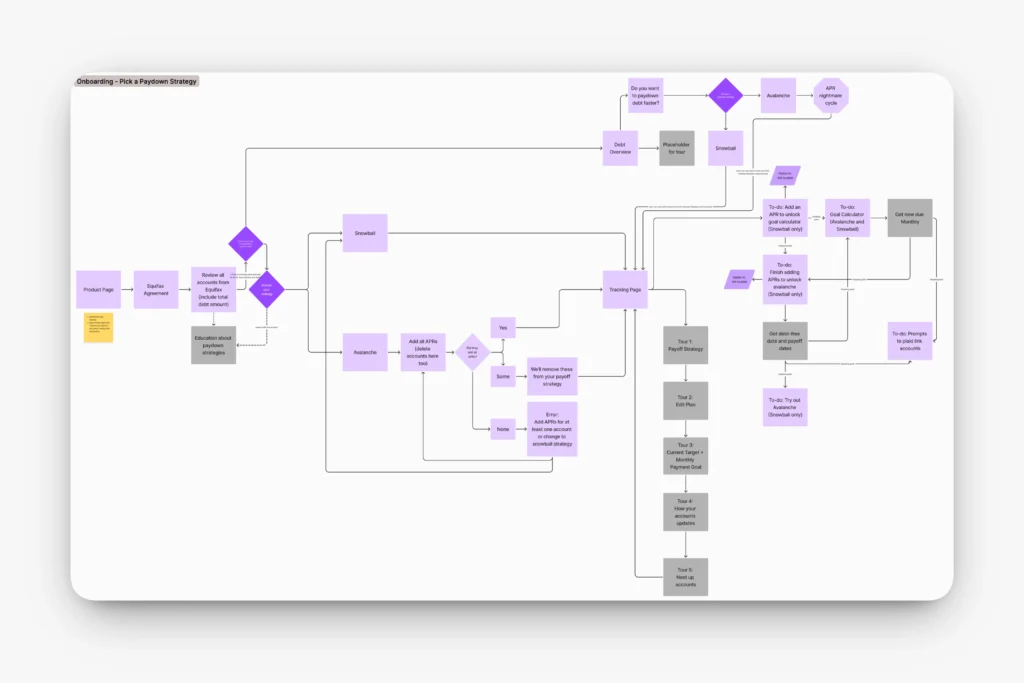
From account linking to payoff success

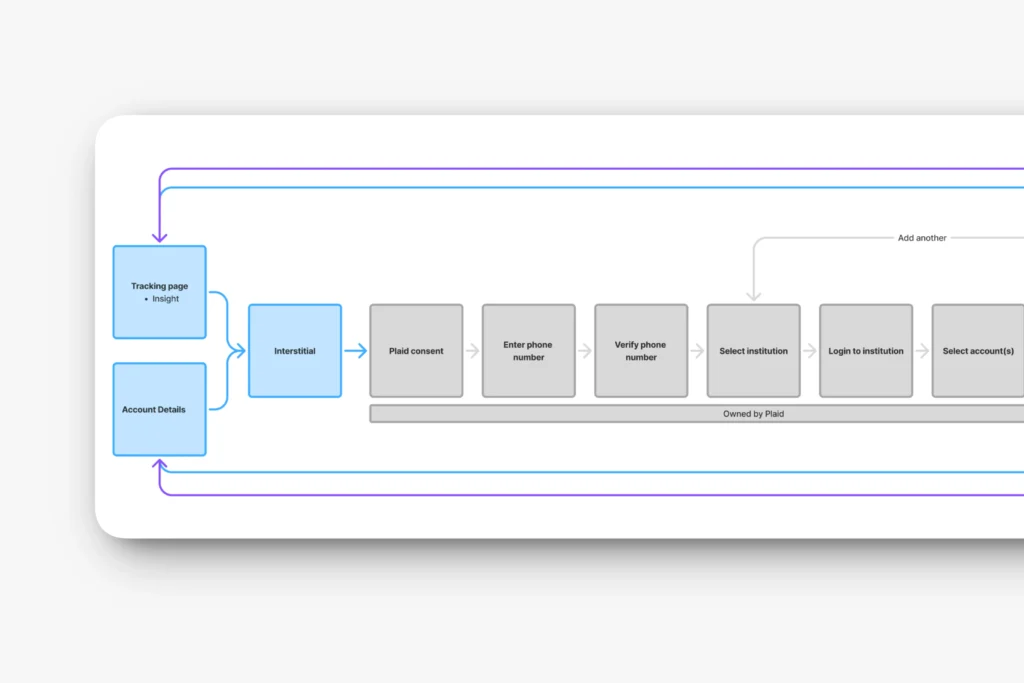
I designed end-to-end flows that guided users from linking accounts via Plaid to selecting Snowball or Avalanche strategies and tracking progress over time. Mapping these journeys surfaced key decision points and education moments.

Prototyping During Platform Transformation

Designing while evolving the design system

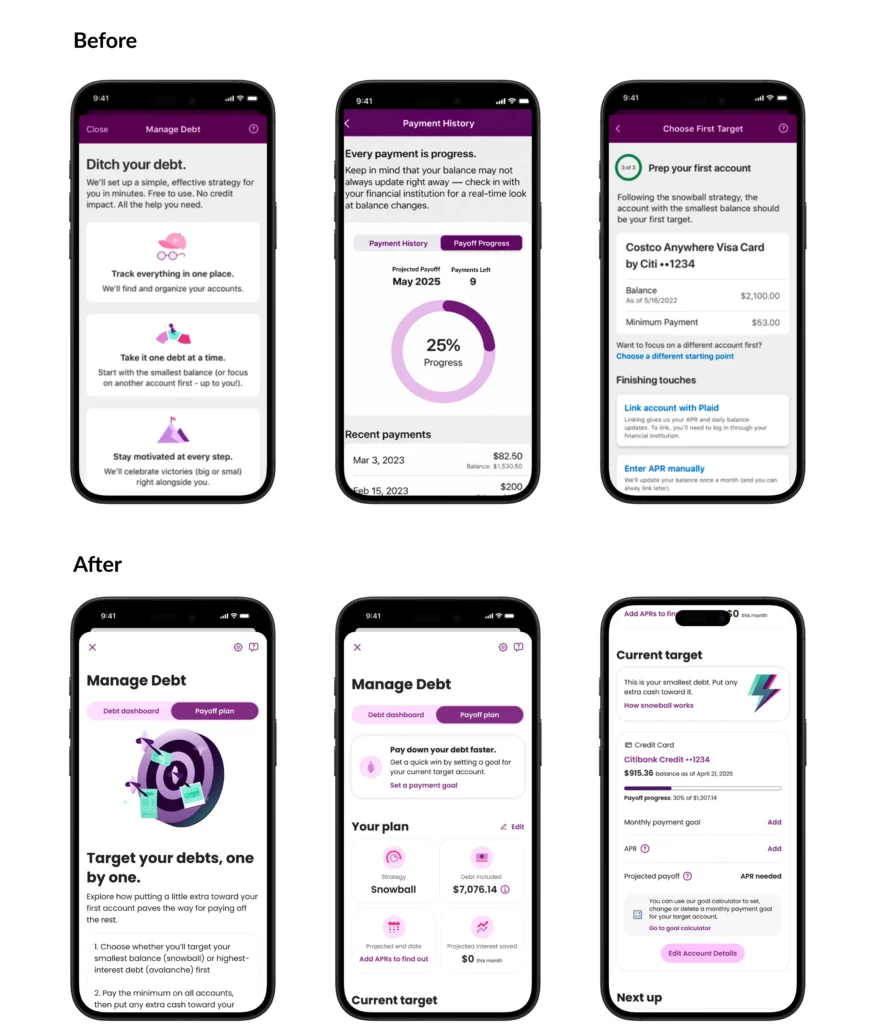
During this initiative, our team transitioned from Sketch to Figma while modernizing Ally’s design system. The previous system lacked cohesion and identity, making early exploration feel constrained.

The new design tokens and components allowed us to move faster and create a more unified visual language, improving both design consistency and engineering efficiency.

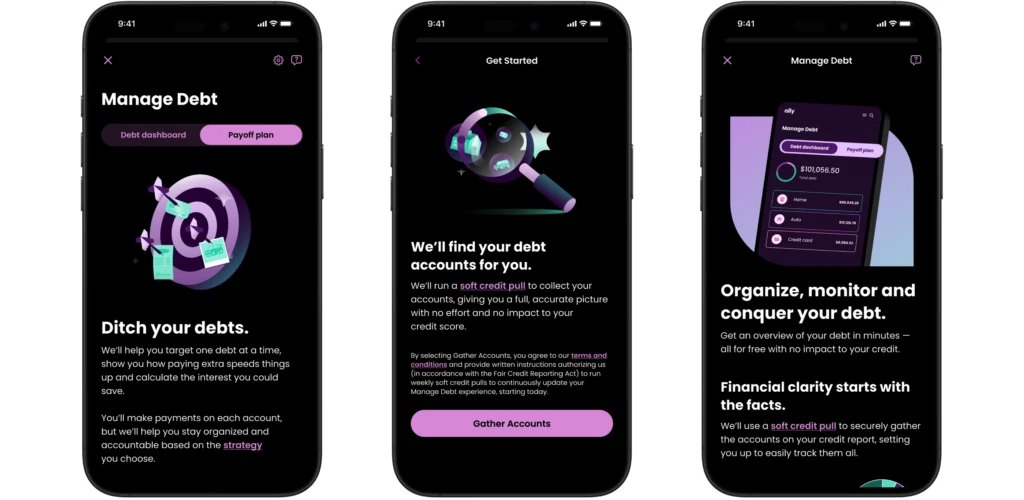
The introduction of design tokens and standardized components allowed us to move faster and create a more unified visual language. As part of this evolution, we incorporated dark mode tokens into the experience. With dark mode increasingly expected by users, designing for both themes ensured consistency, accessibility, and greater personalization across the app.

Designing Within Real-World Constraints

Meeting customers where they are and designing for flexibility

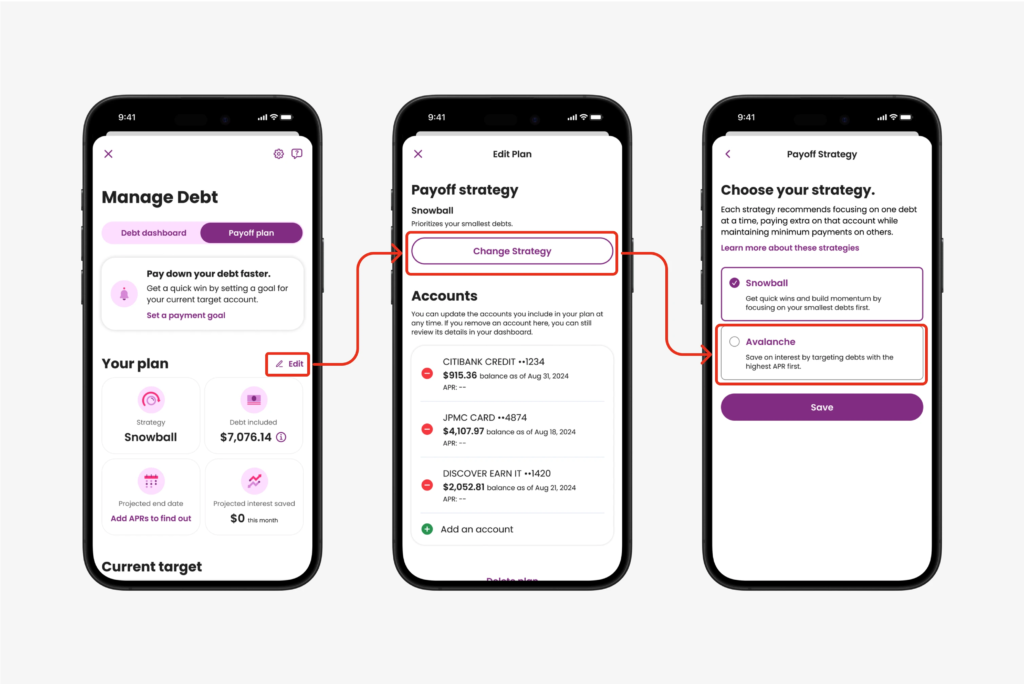
Debt repayment is not one size fits all. We designed the experience to let users switch between Snowball and Avalanche strategies, giving them flexibility to adjust their plan as their situation changed.

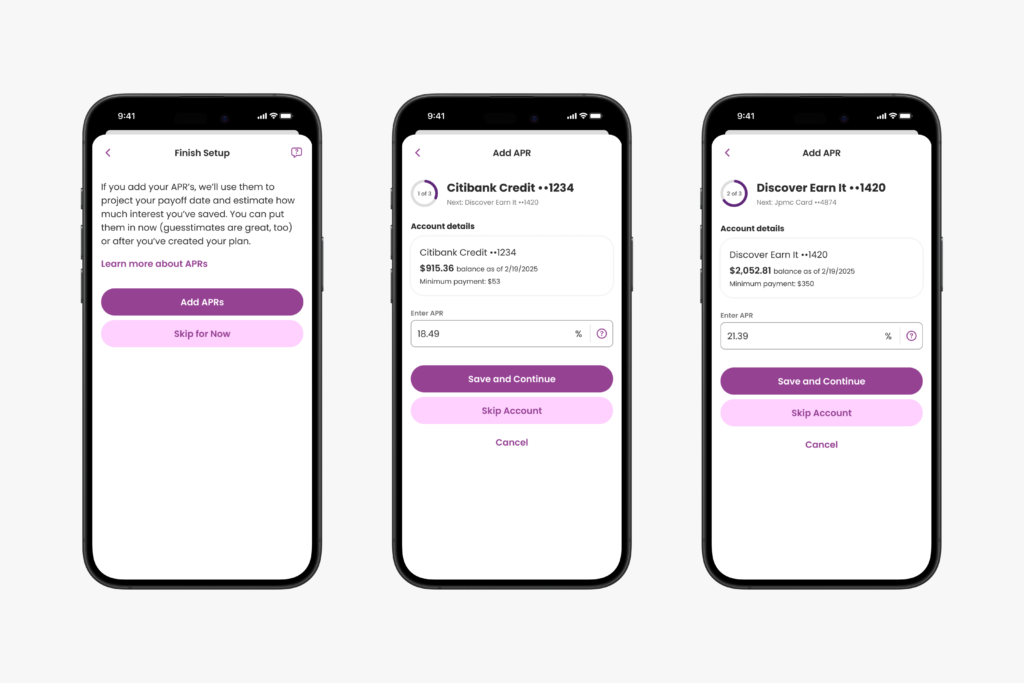
Because Plaid did not always retrieve APR data for certain tradelines, we created a simple flow allowing users to manually add or edit their APRs. This ensured payoff calculations remained accurate and trustworthy.

Reflection

Expanding Ally’s financial wellness ecosystem

This initiative introduced Ally’s first structured debt payoff planning experience, moving beyond monitoring into guided action. Customers could model strategies, visualize payoff timelines, and track progress toward becoming debt free.

By offering the tool for free, Ally reinforced its commitment to financial wellness while increasing engagement within its ecosystem.

Building financial tools shaped how I lead

We experimented with the Shape Up methodology for nearly a year, but frequent product owner turnover and cross-functional misalignment made delivery challenging. To maintain momentum, I built closer partnerships with engineering and created recurring syncs to stay aligned.

We later returned to a traditional agile model, which improved predictability and reduced stress.